Mostrando entradas con la etiqueta Spain. Mostrar todas las entradas

Teruel, Up, Up On The Mountain

La Escalinata (Teruel)

I know it's been a while, but I guess I got hooked up with life, not to say a bit lazy, but time is our eternal enemy and that's a very good excuse.

In mid october I went for a day trip to Teruel, a small mountainous Spanish city north of Valencia, in the Aragon Province, best known for it's Lovers and Mudejar architecture style.  

First of all when you walk on Teruelesque earth comming from the train stration you are welcomed by La Escalinata, a quite long stair, to keep you fit. This stair is made in a beautiful Mudejar style and it's like nothing I've ever seen before.

Teruel city center is only a 5 minutes walk from La Escalinata and the Tourist Information Office is just at the left of La Escalinata. As I said at the beginning, Teruel is a small city, small enough for it's inhabitants to start in 1999 a campaign with the slogan "Teruel existe" ("Teruel exists"). Well, it does. I've been there, I've seen it with my own eyes. You can take my word for it. Teruel is there, small but strong, exactly like its Torico, a small 60kg bronze statue reprezenting a bull, on top of a tall column in the middle of Teruel's main square.


Teruel's other symbol are The Lovers of Teruel. The story of the Lovers took place in 1217. But people of Teruel still remember them, probably mainly to the mausoleum in the San Pedro's Church housing the mummified bodies of Isabel Segura (a rich lady) and Diego de Marcilla (a poor man who battled at Crusades to earn some money with the intention to return to get married with Isabel) whose love ended tragically. It's kind of a Romeo and Juliet love story. Diego went away to gather wealth and Isabela was supposed to wait for him 5 years. Diego was not heard from in those five years and so on the day of the five years' close Isabel's father married her to somebody else. Right after the wedding ceremony Diego shows up with great riches but there was nothing he could do. So that night, Diego sneaks into the bedroom of Isabel and her husband and gently awoke her. He pleaded to her, "Kiss me for I am dying", but she refused. Upon hearing this Diego could not bear the separation between himself and his love, and with a sigh he died on the feet of his beloved Isabel. The next day, during Diego's funeral, Isabel showed up dressed in her wedding dress. She proceeded to walk to the front of the church and place a kiss on the man whom she had refused but in doing so Isabel died, falling prostrate on the body of the man whom she loved.

The mausoleum of The Lovers of Teruel

And the Lovers story at the top of La Escalinata

The San Pedro Church is a magnificent mudejar style church. I loved the interior, so rich in detail and color. The Mudéjar Architecture of Aragon is a World Heritage Site in Spain. Mudéjar is the name given to individual Moors or Muslims of Al-Andalus who remained in Christian territory after the Reconquista but were not converted to Christianity. It also denotes a style of Iberian architecture and decoration, particularly of Aragon and Castile, of the 12th to 16th centuries, strongly influenced by Moorish taste and workmanship.

San Pedro Church (Teruel)

The Cathedral is also in Mudejar style and though the interior didn't impress me that much in general, it's ceiling amazed me, especialy that the guided tour takes you up through the tower next to the ceiling so you can see it from up close.

Teruel Cathedral

The San Martín Tower from the 13th century is considered to be the most beautiful in Teruel.

San Martín Tower (Teruel)

Teruel Town Hall Square


Teruel is seeable in 4 hours and you can still take your time to have lunch. Teruel is well known for its jamón serrano (cured ham), but they also have very good cheese. Yummy! I'm craving for them right now.

Teruel is also known for it't pottery so if you know you have hungry for gifts big children waiting for you at home, you don't have to look far.

One more tip and I'm out of here. Teruel is noted for its harsh climate (hot in summer and very cold in winter), it is situated at 915 metres above sea level so if you go visit during the winter time, be prepared for snow. This being said, I'm going for a walk 'cause it's sunny outside and I need my tan nice and ready for my Las Fallas pictures, comming up next.

Read more...

Halloween in Europe

Halloween is a European holiday at core. It basically drags it´s roots from the Celtic festival of Samhain which celebrated summer's end. Halloween was taken to US by the Irish immigrants. Though nowadays Halloween is thoroughly celebrated all over US and is one of the most important US holidays, Europe celebrates Halloween too. Wearing costumes and attending costume parties, dining in Halloween decorated restaurants, ghost tours, watching horror movies and telling scary stories are common Halloween activities in Europe. Trick or treating is not as common but is not unheard of in some counties.

In Valencia, where I live now, the heraldic symbol of the city is the bat. A bit spooky and Halloweenish, isn´t it? The bat is represented all over the city and supposedly has its origins in a winged dragon. There is a legend that says that thanks to the humble intervention of a bat, king James I of Aragon was able to win a crucial battle against the Saracens that allowed him to win Valencia for his kingdom. Go Baty!

See the bat on top of the Valencian Town Hall


And on top of "La Puerta del Mar" (Sea Door) from Valencia

I love Valencia by night as the streets are inundated by this pumpkin like light color. Last night everybody was there: The Kitties, The Nurses, The Wiches, The Devils, The Vampires who don´t show of in pictures because they are, well, vampires, even characters from Alice in Wonderland. It was a hell of a Halloween party!

Valencia BatHalloween in Europe Halloween in Europe Halloween in EuropeHalloween in Europe Halloween in Europe

Read more...

Valencia Travel - The Silk Exchange

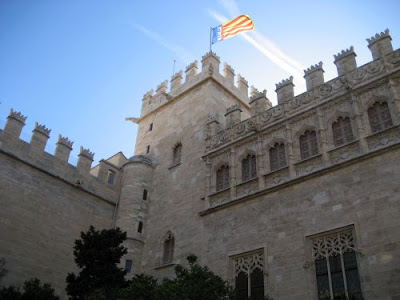
The Silk Exchange (La Lonja de la Seda), Valencia

Today I´ve visited La Lonja de la Seda (The Silk Exchange) in Valencia for the thousandth time. I love it. The entrance is free and the place is not very big and lacks furniture, but it is really refreshing and castle like, with huge doors, very high ceiling and enormous columns. The Silk Exchange was declared a UNESCO World Heritage Site in 1996 for being one of the most stunning, most important and best preserved examples of Late Gothic architecture in the entire Europe.

Built at the beginning of XVIth century, La Lonja (Silk Exchange) is the real emblem of the Golden Age of Valencia - the times when the city was one of Europe's main economic centres. La Lonja is an impressive building and a must see for the traveler to Valencia and that´s why it is always included in any Valencian travel itinerary. La Lonja is composed of three parts (plus the Orange Garden - a walled court-yard). The main hall, Sala de Contratacion (The Contract Hall) is an enormous, lavishly decorated space supported by gorgeous twisted columns. This was the centre of life in La Lonja, the place where the merchants would meet, deal and sign. The side-wing is named the Pavillion of the Consulate, and this was the seat of the Tribunal del Mar - the first merchant tribunal to ever be formed in Spain. The first two floors were the main function rooms, with the upper one hosting a richly decorated ceiling - a masterpiece of medieval art which had the King ride out of the capital just to see it. La Lonja is situated next to the Central Market and only 5 minutes from the Town Hall, basically in the heart of Valencia and next to many typical tapas bars tourists and locals alike so enjoy.

The Silk Exchange (La Lonja de la Seda), ValenciaThe Silk Exchange (La Lonja de la Seda), ValenciaThe Silk Exchange (La Lonja de la Seda), ValenciaThe Silk Exchange (La Lonja de la Seda), ValenciaThe Silk Exchange (La Lonja de la Seda), Valencia The Silk Exchange (La Lonja de la Seda), Valencia

Read more...

Saint Dionysius´ Feast Day in Valencia

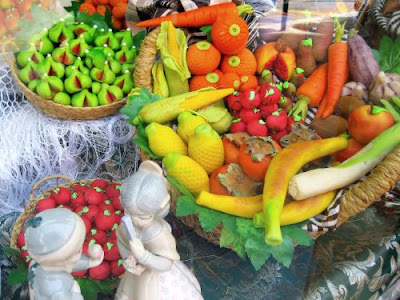
Saint Dionysius´ Feast Day in Valencia
On October the 9th Valencia celebrates Saint Dionysius' Feast Day, the local version of Saint Valentine. The valencian men wrap up in silk handkerchiefs specially decorated and shaped marzipan sweets that you can find in almost any valencian bakery around these dates and give them to their girlfriends as a demonstration of their affection. As I love colorful marzipan sweets I took a lot of photos as you can see. And yes, I got a nice marzipan box too. I´m a good girl, you know? I always get what I want!

Saint Dionysius´ Feast Day in ValenciaSaint Dionysius´ Feast Day in ValenciaSaint Dionysius´ Feast Day in ValenciaSaint Dionysius´ Feast Day in ValenciaSaint Dionysius´ Feast Day in Valencia Saint Dionysius´ Feast Day in Valencia Saint Dionysius´ Feast Day in Valencia Saint Dionysius´ Feast Day in Valencia Saint Dionysius´ Feast Day in Valencia

Read more...
Related Posts with Thumbnails

Europe Travel PhotoBlog

Europe Budget Travel Solutions

Recent Posts

Followers

Europe Travel's Fan Box

Europe Travel on Facebook

  © Blogger template AutumnFall by Ourblogtemplates.com 2008

Back to TOP